The corruption of Zossima’s body
The Brothers KaramazovThe corruption of Zossima’s body is the physical event that turns mourning into a monastery scandal. As signs of decomposition emerge from the elder’s coffin and a smell becomes unmistakable, the monks’ expectation of an extraordinary sign gives way to disorder, doubt, and public scrutiny.
Expectation and First Signs
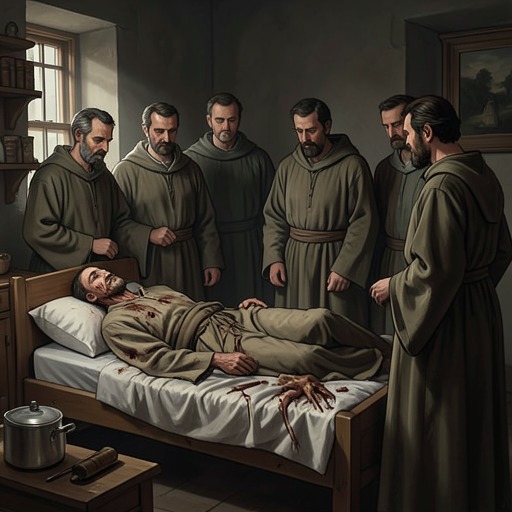
The incident unfolds after the elder’s death, when the monks come and go from his cell. At first, the signs are observed silently: those who notice them appear afraid to communicate the thought forming in their minds. The delay matters. Before anyone states what is happening, the shared expectation of a different outcome makes the first evidence difficult to acknowledge.
Soon after midday, the signs begin to appear. By three o’clock the smell of decomposition is unmistakable. What had been a guarded suspicion becomes a fact that can no longer be kept within the cell, and the coffin itself becomes the center of a crisis that unsettles the community.
The Monastery Scandal
The smell is described as a scandal without precedent in the monastery’s remembered history. Its force comes not only from the body’s decay, but from the contrast between that physical fact and what many had expected of a saint. The event exposes how strongly the monks’ hopes had depended on a visible confirmation of holiness.
The discovery is followed by unseemly disorder among the monks themselves. Those entering the cell do not all arrive in the same spirit: as decomposition becomes apparent, their conduct betrays secret motives. They stay briefly, hurry out, and carry the news to the other monks. The movement between coffin and crowd turns private observation into communal spectacle.
Consequences and Significance
The scandal reaches beyond the immediate disturbance. Years later, sensible monks still recall the day with amazement and horror, astonished that the community could have behaved so disorderly. The episode thus preserves two shocks at once: the failure of the expected bodily sign and the failure of the monks to respond with composure.
The incident does not, by itself, settle the question of Zossima’s spiritual worth. Instead, it places faith under pressure by making visible the difference between reverence for the elder and the desire for a miraculous guarantee. The coffin’s decay becomes a test of the community: while the body supplies no sign they had hoped for, the monks’ reactions reveal the uncertainty and self-interest that the expectation had concealed.